

Beyond the Software: Why HR Managers Must Master the ATS Before Pressing ‘Go Live’

In the modern talent acquisition landscape, the Applicant Tracking System (ATS) is the central nervous system of recruitment. It is the engine that drives sourcing, screening, interviewing, and hiring. Yet, a troubling trend persists in the HR world: organizations frequently purchase expensive, feature-rich ATS platforms, only to deploy them with a superficial understanding of how they actually work.
This “shiny object syndrome” leads to frustrated recruiters, a degraded candidate experience, and a poor return on investment.
As HR professionals, we must recognize a fundamental truth: Technology does not fix a broken process; it only accelerates it. Therefore, it is absolutely critical for HR managers to deeply understand their chosen ATS before using it for active recruitment. Here is a detailed look at why this pre-deployment comprehension is non-negotiable, and how to achieve it.
The High Cost of Ignorance: Why Understanding Matters
Deploying an ATS without a comprehensive understanding of its mechanics, limitations, and capabilities is akin to buying a high-performance sports car without knowing how to drive a manual transmission. The potential for a crash is high. Here is why deep comprehension is vital:
1. Safeguarding the Candidate Experience and Employer Brand
The ATS is often the first digital touchpoint a candidate has with your company. If an HR manager does not understand how to configure the application flow, they might inadvertently create a clunky, mobile-unfriendly, or excessively long application process. Furthermore, if the system’s automated communication triggers are not properly understood and configured, candidates might receive confusing emails, or worse, fall into the dreaded “resume black hole” without ever receiving a rejection or status update. A poorly understood ATS directly damages your employer brand, causing top talent to abandon your pipeline.
2. Ensuring Data Integrity and Legal Compliance
Recruitment is heavily regulated. Depending on your jurisdiction, you must comply with GDPR, CCPA, EEOC, and OFCCP regulations regarding data privacy, retention, and equal opportunity. If an HR manager does not understand how the ATS handles data parsing, consent tracking, and automated dispositioning, the company is at risk of severe legal and financial penalties. Understanding the system’s data architecture ensures that candidate data is stored securely, retained for the legally required timeframe, and purged correctly when necessary.
3. Maximizing ROI and Operational Efficiency
Companies spend thousands of dollars annually on ATS licenses. The ROI is only realized if the system is used to its full potential. An HR manager who only uses 20% of the ATS’s capabilities (e.g., just using it as a digital filing cabinet) is wasting 80% of the software’s value. By understanding advanced features like AI-driven screening, CRM integrations, automated interview scheduling, and custom reporting, HR managers can drastically reduce time-to-fill and cost-per-hire, transforming the ATS from a cost center into a strategic advantage.
4. Driving Internal Adoption and Change Management
The biggest point of failure in any HR tech implementation is user adoption. If the HR manager does not fully understand the tool, they cannot effectively train their recruiting team. When recruiters find the system confusing or feel it creates more work rather than less, they will revert to shadow processes (like using personal spreadsheets), rendering the ATS useless. An HR manager who understands the system can act as a change champion, translating technical features into daily workflow benefits for their team.
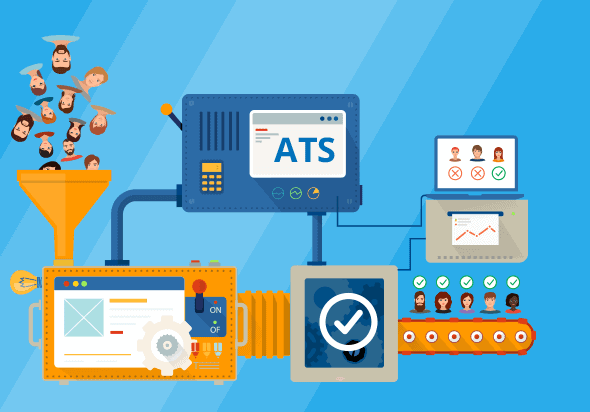
How HR Managers Can Master Their ATS Pre-Launch
Understanding the ATS is not a passive activity; it requires intentional effort during the selection and onboarding phases. Here is a strategic blueprint for HR managers to master their system before going live:
Step 1: Map the Recruitment Journey First
Before looking at the software’s features, map out your ideal candidate journey and internal recruitment workflow on a whiteboard. Identify the bottlenecks, the required approvals, and the communication touchpoints. Once you understand your process, you can configure the ATS to support it, rather than forcing your team to adapt to the software’s default settings.
Step 2: Differentiate Between “Must-Haves” and “Nice-to-Haves”
During the vendor demo and onboarding phases, it is easy to get distracted by flashy features. HR managers must understand the core mechanics of the system first. Master the foundational elements (job creation, candidate parsing, pipeline movement, and reporting) before attempting to implement complex automations or third-party integrations.
Step 3: Become the “Super-User”
HR managers should not rely solely on the vendor’s basic onboarding webinars. Take the time to read the knowledge base, watch advanced tutorial videos, and participate in user community forums. The HR manager (or a designated Talent Ops lead) must become the internal “Super-User”—the person who knows the system well enough to troubleshoot basic issues and understand the logic behind the software’s algorithms.
Step 4: Conduct a “Sandbox” Pilot
Never launch an ATS directly to the public. Create a sandbox or test environment. Have the HR team run through mock scenarios:
- What happens when a candidate applies via LinkedIn?
- How does the system handle a candidate who is rejected at the phone screen stage?
- Can we generate an EEO compliance report accurately? Testing these scenarios in a safe environment builds muscle memory and highlights configuration errors before real candidates are affected.
Step 5: Establish a Feedback Loop
Understand that mastering the ATS is an ongoing process. Before the official launch, set up a structured feedback loop with your recruiting team. Encourage them to point out friction points. An HR manager who understands the system will be able to distinguish between a “user error” and a “system configuration error,” allowing for rapid, targeted adjustments.
The Bottom Line
An Applicant Tracking System is a powerful amplifier. If your recruitment strategy is sound and your team is well-trained, an ATS will amplify your success, bringing in top talent efficiently. However, if your processes are flawed and your understanding of the tool is shallow, the ATS will simply amplify your inefficiencies and frustrate your candidates.
For HR managers, taking the time to deeply understand the ATS before pressing “go live” is not just a best practice; it is a strategic imperative. By mastering the technology, you free yourself and your team to do what humans do best: build relationships, assess cultural fit, and make nuanced hiring decisions.
Don’t just buy the software. Understand it. Master it. Then, let it work for you.