
From Gatekeepers to Strategists: How AI Recruitment Agents Are Transforming the Role of Recruiters
For decades, the role of the recruiter has been defined by a paradox: it is fundamentally a “people” profession, yet it is bogged down by relentless, transactional processes. Recruiters have historically spent up to 70% of their time on administrative tasks—sourcing, screening, scheduling, and chasing candidates—leaving little room for the actual human element of talent acquisition.
Enter the era of AI Recruitment Agents.
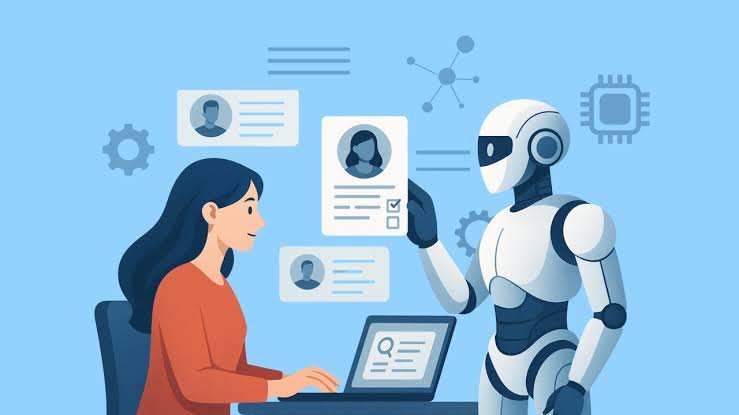
Unlike basic AI tools or simple chatbots that require constant human prompting, AI agents are autonomous or semi-autonomous systems capable of executing complex, multi-step workflows. They can source, engage, screen, and schedule with minimal human intervention.
But rather than rendering the human recruiter obsolete, these sophisticated agents are catalyzing a profound evolution in the profession. Here is a detailed look at how AI recruitment agents are transforming the role of recruiters from administrative gatekeepers to strategic talent advisors.

1. The Shift from Keyword Sourcing to Semantic Matching
Historically, sourcing was a numbers game reliant on exact keyword matches within an Applicant Tracking System (ATS). If a candidate’s resume didn’t say “Project Management,” they were missed, even if they listed “Agile Scrum Master.”
The AI Agent Transformation: AI agents utilize Natural Language Processing (NLP) and semantic search to understand the context and intent behind a resume or profile. They can identify skill adjacencies, infer capabilities from work history, and assess cultural fit based on nuanced language.
- The Recruiter’s New Role: Recruiters no longer need to spend hours tweaking Boolean search strings. Instead, they act as Talent Curators. They define the strategic parameters of the search, review the highly qualified shortlists generated by the AI, and focus on assessing the candidate’s deeper motivations and long-term potential.
2. Elevating Candidate Experience from Transactional to Concierge-Level
Candidate ghosting and drop-off rates are major pain points in modern recruitment, often stemming from poor communication and slow response times.
The AI Agent Transformation: AI agents act as 24/7 talent concierges. They can instantly answer candidate FAQs, guide them through the application process, conduct initial conversational screenings, and even negotiate interview times by syncing with hiring managers’ calendars. They provide a personalized, responsive experience at scale.
- The Recruiter’s New Role: With the administrative burden of candidate communication offloaded, recruiters transition into Relationship Builders. They step in at the critical “moments that matter”—such as the final interview stage, salary negotiations, and the crucial post-offer period to prevent candidate drop-off. The human touch is reserved for high-stakes, high-emotion interactions.
3. From Gut-Feel Decisions to Predictive Analytics
Traditional hiring often relies on a recruiter’s “gut feeling” or unstructured interviews, which are notoriously poor predictors of job performance.
The AI Agent Transformation: Advanced AI agents can analyze vast amounts of historical company data to identify the traits, skills, and experiences that correlate with long-term success and retention in specific roles. They can provide predictive scores for candidates, highlighting potential flight risks or high-performers.
- The Recruiter’s New Role: Recruiters evolve into Data-Driven Talent Advisors. They use AI-generated insights to guide hiring managers, challenging biased assumptions with empirical data. They shift from simply filling a req to advising the business on who will actually succeed and thrive in the role.
4. Mitigating Bias and Championing DEI
Unconscious bias is an inherent human flaw that has plagued hiring for centuries. While humans struggle to ignore demographic markers, AI can be designed to look strictly at skills and outcomes.
The AI Agent Transformation: AI agents can be programmed to blind resumes, standardize interview questions, and evaluate responses based purely on predefined competency rubrics. Furthermore, AI can analyze job descriptions to flag exclusionary language before a role is even posted.
- The Recruiter’s New Role: Recruiters become DEI Auditors and Champions. While AI helps level the playing field, it is not immune to algorithmic bias if trained on flawed historical data. The modern recruiter must actively monitor AI outputs, ensure the algorithms are equitable, and intervene when the AI misses the nuanced, human elements of diversity (such as non-traditional career paths).

The New Recruiter Skill Set: What It Takes to Thrive
If AI handles the “science” of recruiting, humans must master the “art.” To thrive in an AI-augmented environment, recruiters must cultivate a new set of competencies:
- High Emotional Intelligence (EQ): AI can assess technical skills, but it cannot read a candidate’s body language, understand their personal anxieties about a career change, or build the deep trust required to close a passive, top-tier candidate. Empathy is now a recruiter’s primary currency.
- AI Fluency and “Prompt Engineering”: Recruiters must understand how to interact with AI agents. This means knowing how to write effective prompts, how to audit AI outputs for accuracy, and how to integrate AI tools seamlessly into the broader HR tech stack.
- Strategic Workforce Planning: Freed from the daily grind of filling individual seats, recruiters must look at the macro level. They need to align talent acquisition with broader business objectives, forecasting future skill gaps and building proactive talent pipelines.
- Employer Brand Storytelling: AI can send a message, but it cannot sell a company’s vision. Recruiters must become compelling storytellers, articulating the company’s culture, mission, and value proposition in a way that resonates emotionally with top talent.
Navigating the Pitfalls: The Human in the Loop
While the transformation is overwhelmingly positive, HR leaders must navigate the risks of over-reliance on AI agents.
- The “Uncanny Valley” of Communication: If an AI agent sounds too human, it can feel deceptive; if it sounds too robotic, it frustrates candidates. Recruiters must carefully design and monitor the “voice” of their AI agents.
- Data Privacy and Compliance: AI agents process massive amounts of personal data. Recruiters must work closely with legal and IT teams to ensure AI workflows comply with GDPR, CCPA, and emerging AI-specific regulations.
- Maintaining the Human Connection: The ultimate risk of AI in recruiting is a sterile, entirely automated process. Recruiters must ensure that AI is used to enhance human connection, not replace it.
Conclusion: The Co-Pilot, Not the Autopilot
There is a prevalent fear in the HR community that AI will replace recruiters. The reality is far more nuanced. AI recruitment agents will not replace recruiters; rather, recruiters who leverage AI agents will replace those who do not.
By automating the transactional, AI agents are stripping away the administrative burdens that have historically caused recruiter burnout. In doing so, they are returning the profession to its roots: connecting people with purpose.
The recruiter of the future is not a resume-sorting gatekeeper. They are a strategic advisor, a data interpreter, an empathetic counselor, and a brand ambassador. By embracing AI agents, recruiters are finally free to do what they do best: be human.